Tokyo Car Meet Etiquette: The Rules Every First-Timer Should Know
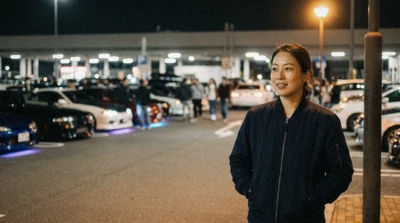
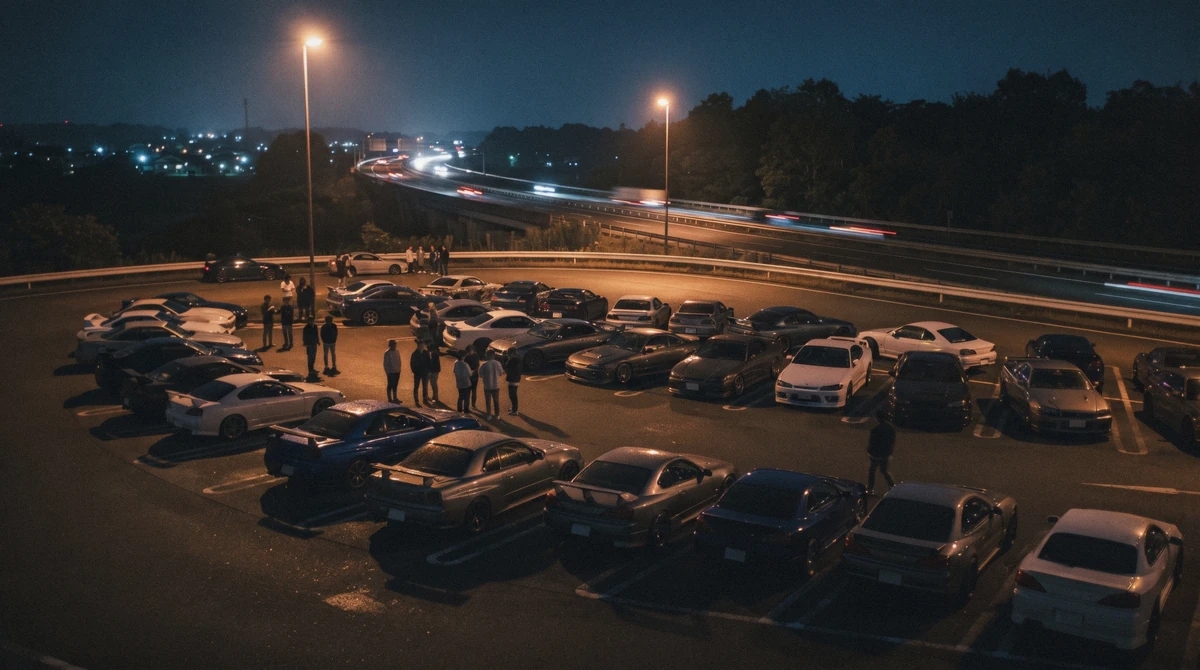
Tokyo car meet etiquette comes down to one rule that covers most of what follows: look, don't touch, and ask before anything closer. My first night at Daikoku PA I stood a full arm's length from a Skyline for a photo, out of pure instinct, before I even understood why that mattered. A regular next to me smiled and said most visitors get it right without being told, which is true, but the ones who don't are the reason security tightens and meets get shut down more often than they should. This guide covers every behavior rule that governs a night at Daikoku or Tatsumi PA, photos, talking to owners, noise, drones, and exactly what gets a lot cleared by police, so nothing on your first meet catches you off guard. If you haven't picked a ride yet, browse our night-ride comparison before you go.
Quick answer
The one rule that covers almost everything at a Tokyo car meet: look, don't touch, and ask before anything closer, a photo of an interior, a question to an owner, a step nearer the car. Everything else on this page is a variation on that same idea.
Key takeaways
- Never touch, lean on, or set anything down on a car, no exceptions
- Exterior photos are fine by default; interiors and engine bays need the owner's nod first
- No flash into cabins or faces at night, and blur or crop plates before posting photos online
- Drones are banned outright, Tokyo and Yokohama both sit in restricted no-fly zones under Japanese law
- Revving and burnouts are what actually get Daikoku shut down by police, not visitors taking photos
- A guide handles introductions and translation, the etiquette shortcut a first-timer can buy from $82
Why Etiquette Decides Whether the Meets Survive
Daikoku and Tatsumi PA are working highway rest areas, not car shows with a permit, an organizer, or a fence. They exist because the police tolerate them, and that tolerance has a limit that gets tested every time a lot draws too much noise or too much traffic. Visitors are guests in someone else's routine, not an audience at an event, and that distinction matters more here than at almost any other stop on a Tokyo trip.
A single bad night, a burnout caught on camera, a blocked lane, a shouting match, can tighten police attention for weeks and make every regular's Friday night harder, including the tour operators who bring visitors out. None of the rules below are arbitrary. Each one traces back to a specific way a meet has actually been shut down before, and following them is how the scene keeps existing for the next person who wants to see it.
The Golden Rules at a Glance
The short version, before the full detail below.
| Situation | Do | Don't |
|---|---|---|
| Exterior photos | Shoot freely from a respectful distance | Don't lean in over the hood or crouch right at the bumper for an angle |
| Interior or engine bay photos | Ask the owner first, most say yes | Don't open a door or pop a hood yourself |
| Touching a car | Keep hands off entirely | Never touch, lean on, or set a drink down on a car |
| Flash photography | Use ambient light or a slower shutter | No flash into cabins or into anyone's face at night |
| License plates in photos | Blur or crop them before posting online | Don't post a clear plate publicly |
| Walking the lot | Stay on foot paths, keep lanes clear | Don't block a driving lane or a parking bay, even briefly |
| Noise | Keep your own voice and volume down | Don't rev an engine or attempt a burnout, ever |
| Smoking | Use a designated smoking area | Don't smoke wherever you happen to be standing |
The sections below cover each of these in more depth, since a few of them, photos especially, have their own small conventions worth knowing before you go.
Photographing Cars the Right Way
Exterior shots are the default and nobody minds, that's genuinely most of why owners bring their cars out. Interiors and engine bays are a different matter: always ask before you open a door, pop a hood, or lean in for a cabin shot, and most owners say yes readily if you ask rather than just doing it. No flash photography into cabins or into anyone's face after dark, both because it ruins night vision in a lot full of moving cars and because it reads as intrusive rather than appreciative.
There's also a photo convention specific to Japanese car culture worth knowing before you post anything online: plates get blurred or cropped out in shared photos, a habit that protects owners' privacy in a scene built on trust between strangers. Follow it when you publish your own shots, even if nobody at the meet asks you to directly, since it's the accepted norm rather than an optional courtesy.
Talking to Owners
Owners are usually proud to talk about their builds, and a car meet is one of the few places in Tokyo where a total stranger striking up a conversation is genuinely welcome rather than odd. A simple compliment opener works better than any rehearsed question: “kakkoii desu ne”, roughly “that's really cool,” and I've watched it get an owner to open the hood unprompted more times than I can count. English is common enough among the regulars at Daikoku that a short conversation usually works even without any Japanese at all.
Know when to walk away, too. If an owner is mid-conversation with someone else, packing up to leave, or simply not making eye contact as you approach, that's your answer. Nobody owes a stranger a conversation just because their car is parked in a public lot, and reading that boundary correctly is as much a part of good etiquette here as anything you say.
First Meet, Step by Step
A short timeline of how a first night with a guide actually unfolds, so nothing catches you off guard.
| Stage | What happens |
|---|---|
| Arrival with the tour | Your guide parks and gives a short briefing on where to walk and what's off-limits before anyone gets out |
| The first ten minutes | Stay close to your group and let your eyes adjust; this is when it's easiest to accidentally wander into a driving lane |
| How the lot flows | Cars roll in and park in loose, shifting rows all night; there's no fixed layout, so a spot that's empty on arrival may fill later |
| When cars roll out | Give way immediately; a car leaving takes priority over anyone on foot, even on a marked path |
Arrive with your tour group and let the guide's short briefing set the tone before you start walking. The first ten minutes are when most visitors accidentally drift into a driving lane simply because their eyes haven't adjusted to the layout yet, so stick close to your group at the start. The lot itself has no fixed rows or reserved spaces; cars park where there's room and shift position all night as people arrive and leave, which is part of why lanes have to stay clear at all times.
When a car rolls out, give way immediately and step well back, since a driver maneuvering in a tight lot at night has less margin than it looks like from the outside.
What Gets Meets Shut Down
Revving an engine and attempting a burnout are, by a wide margin, what actually triggers a police closure of Daikoku on a busy night, not visitors taking photos or talking to owners. Blocking a driving lane, even briefly for a better photo angle, and crowding the exit as cars try to leave are the next most common causes, since both turn a working rest area into a bottleneck the police can't ignore.
When police do clear the lot, and it happens, leave promptly without argument. Nobody at a meet benefits from a visitor pushing back on an officer's instruction, and the fastest way for the scene to lose its informal tolerance entirely is a public confrontation that ends up online. A calm, quick exit is the single most useful thing you can do in that moment, both for yourself and for everyone who wants to come back next weekend.
Drones, Tripods and Livestreams
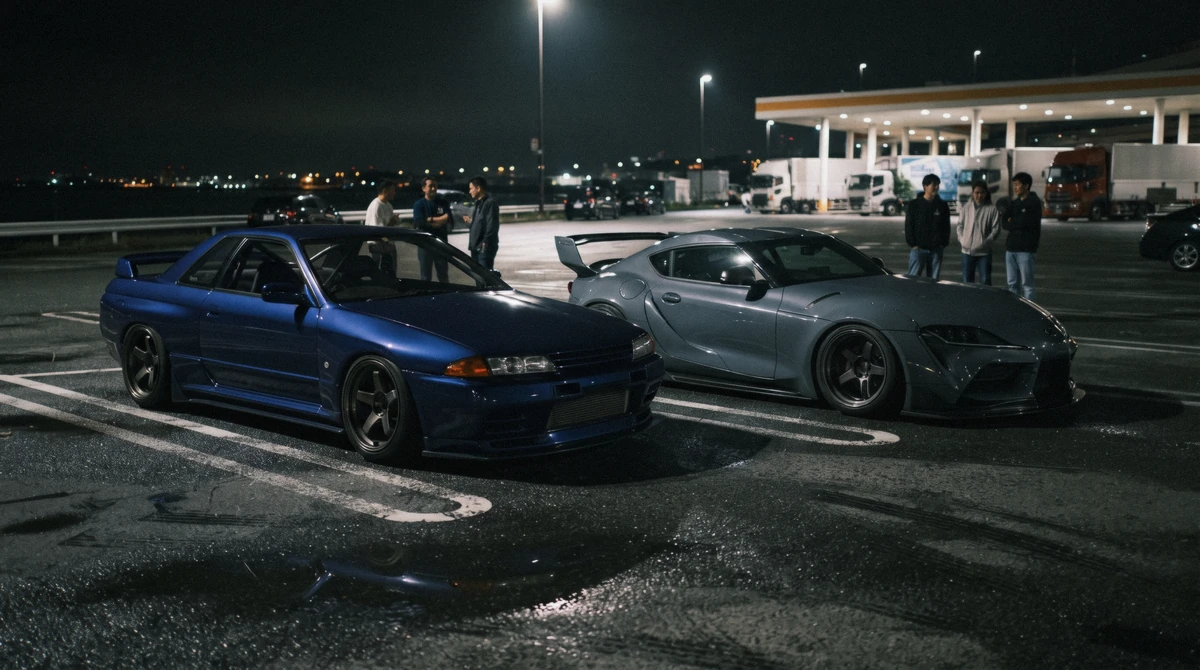
Drones are out, full stop. Both Tokyo and Yokohama sit inside densely inhabited district zones under Japan's Civil Aeronautics Act, which restricts drone flight over populated areas without a specific permit that no visitor is going to hold on a single night out. Don't bring one expecting to fly it at a PA; the restriction applies to the whole area, not just the meet itself.
Tripods and handheld livestreams are a grayer area, tolerated in practice as long as they don't block a walkway or point directly into someone's face without asking. A tripod set up in the middle of a foot path is the kind of small thing that annoys everyone around you fast, so keep gear compact and out of the flow of foot traffic if you bring any.
How a Guide Changes the Night
A guide is genuinely the etiquette shortcut a first-timer can buy, and it's worth understanding what that actually gets you rather than treating it as just transport. Guides broker introductions that would otherwise take a stranger several awkward minutes to attempt alone, translate when a conversation goes past simple English, and read the room in a way a first-timer physically can't yet, knowing which car's owner is in a talking mood and which one just wants to be left alone.
Legendary JDM Underground Meetup and Neon Nights both run guides who know the regulars at Daikoku by name, which changes a night from awkwardly hovering near a car you like to actually getting invited to look inside it. Tours also handle the return leg, back to Shibuya around or after midnight, so plan your last train or a short taxi hop into the night rather than leaving it as an afterthought.
If you're still deciding whether a guided night is the right call at all, the full cost math and honest downsides live in is a JDM car tour in Tokyo worth it, and for what you're actually likely to be standing next to once you arrive, see what cars you'll see at a Tokyo car meet.
Before Your First Meet: Checklist
A short list to run through before you head out, whether you arrive with a tour or work the daytime spotting trail on your own.
- Know the one rule: look, don't touch
- Ask before any interior or engine-bay photo
- Turn off flash for night shots
- Plan to blur or crop plates before posting online
- Leave the drone at the hotel
- Know your last-train time or have a taxi plan back from Shibuya
- Keep a simple compliment phrase ready: kakkoii desu ne
- Stay in a designated smoking area if you smoke
Tokyo Car Meet Etiquette: FAQ
Can I touch the cars at a Tokyo car meet?
No, never, not even briefly to lean in for a photo. It's the single non-negotiable rule of any meet, and owners notice immediately.
Do I need to ask before taking photos?
Exterior photos are fine by default. Interiors and engine bays need the owner's nod first, and most owners say yes readily if you ask rather than just opening a door.
Is it rude to talk to a car's owner?
No, owners are usually proud to talk. A simple compliment like kakkoii desu ne works well, but read the room; if someone's mid-conversation or packing up, let it go.
Can I fly a drone at Daikoku PA to film the cars?
No. Tokyo and Yokohama both sit in restricted no-fly zones under Japan's Civil Aeronautics Act, so drones are out entirely, no exceptions for a quick clip.
What actually gets a car meet shut down by police?
Revving engines and attempted burnouts, by far, followed by blocked lanes and crowding an exit as cars try to leave. Photos and conversation are not the problem.
Should I blur license plates in photos I post online?
Yes, it's the accepted convention in Japanese car culture. Blur or crop plates before sharing any photo publicly, even if nobody asks you to at the meet itself.
Do I need to speak Japanese to talk to owners?
No. English is common enough among the regulars at Daikoku that a short conversation usually works, and a guide can translate anything that goes further than that.