JDM Car Spotting in Tokyo Without a Tour: Can You Do It Yourself?
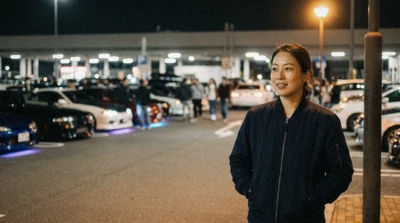
Can you go JDM car spotting in Tokyo without a tour? Partly. The daytime side of this hobby, tuning megastores, used-parts warehouses, and free showrooms, is genuinely walkable and train-reachable with nothing booked. The night side, the Daikoku PA meet everyone actually pictures, is a different story: it sits on an expressway with no pedestrian entrance, and last trains leave before the scene peaks. I have done this both ways, so this guide lays out exactly how far you get on your own, what it really costs once fares and taxis are counted, and the specific point where a guided ride genuinely earns its price. If you land on the tour side, compare the guided Daikoku night rides I track before booking.
Quick answer
Partial. Daytime JDM spotting in Tokyo, tuning stores, parts warehouses, free showrooms, is very DIY-able on trains alone. The night PA meets at Daikoku and Tatsumi are not, since neither has a legal pedestrian entrance and the scene peaks after the last train has already left.
Key takeaways
- Daytime trail costs almost nothing: showrooms are free, a day of train hops runs about ¥1,000-1,500 ($7-10)
- Tatsumi and Daikoku PAs are vehicle-only; there is no legal way to walk in
- A tour genuinely adds what DIY can't: PA access, a guide's introductions, and a ride in the car itself
- Last trains leave central Tokyo around midnight; meets peak 22:00 to 01:00, the core DIY problem
- The one meet a car-less visitor can realistically see is the Friday-evening gathering at A-PIT Autobacs Shinonome
- Guided rides start at $82 and solve access, timing, and introductions in one booking
The Short Answer: What You Can and Can't Do on Your Own
Split this hobby into two halves, because the honest answer is different for each. By day, Tokyo's JDM culture is on open display at tuning megastores, used-parts warehouses, and free manufacturer showrooms, all reachable by ordinary train travel with no booking required. By night, the scene tourists actually want, tuned cars packed into a highway parking area, sits on infrastructure built for vehicles, not pedestrians, and the timing works against anyone relying on trains.
That single fact, not price and not difficulty, is what separates the DIY-able half of this hobby from the half that genuinely needs a guide.
DIY vs Tour at a Glance
Numbers below are per person as of August 2026.
| Option | Cost per person | What you can reach | Time | Best for |
|---|---|---|---|---|
| Daytime DIY (trains only) | about ¥1,000-1,500 ($7-10) | Showrooms, parts stores, street spotting | Half a day, flexible | Budget travelers, daytime browsing |
| DIY + taxi to a night PA | $133-173 round trip, one stop | One parking area, no fallback if closed | One night, high risk of a dead end | Confident night owners only |
| Guided night ride | from $82 | Daikoku or Tatsumi PA, guide introductions, multiple stops | 3 to 5 hours | Anyone who wants the actual meet scene |
The gap is not subtle. Daytime DIY is nearly free and genuinely good. A taxi attempt at the night scene can cost more than the cheapest guided ride and only reaches one location, with no backup if that lot gets closed.
Can Tourists Visit the Expressway PAs Without a Car?
No, not on foot, and this is worth stating plainly because outdated blog posts still imply otherwise. Tatsumi PA sits directly on the Shuto Expressway in Koto City. Tatsumi Station on the Yurakucho Line looks close on a map, but there is no legal pedestrian entrance connecting the station to the parking area; the PA exists for vehicles moving at expressway speed, and walking onto the shoulder to reach it is neither safe nor permitted.
Umihotaru PA, out on the Aqua-Line mid-bay, is the same story again, car-only by design, reinforcing that this is a pattern across the whole network, not a one-off rule at a single lot.
- Tatsumi PA: on the Shuto Expressway, vehicle access only, no pedestrian entrance despite Tatsumi Station being nearby on a map
- Umihotaru PA: mid-Tokyo-Bay on the Aqua-Line, another famous meet spot that is car-only
Daikoku PA on the Bayshore Route in Yokohama runs on the identical rule; I cover the reasoning and the full workaround in our homepage FAQ on visiting Daikoku PA without a tour rather than repeating it here.
Where the Daytime Trail Sits
Everything below is reachable by train, no vehicle required. The two Up Garage branches sit furthest out; the rest cluster closer to central Tokyo.
The Self-Guided Daytime JDM Trail
A-PIT Autobacs Shinonome
The former Super Autobacs Tokyo Bay, now branded A-PIT Autobacs Shinonome, sits in Shinonome, Koto City, walkable from Shinonome Station on the Rinkai Line. It runs standard daytime retail hours, open 9:00 to 21:00 (confirm before you go, as holiday hours shift), and the shop floor alone is worth an hour for anyone into tuning parts. What makes it more than a parts store is the parking lot itself, which has a long-running Friday-evening gathering scene: enthusiasts pull in after work, park nose-out, and talk builds in the same lot every operator's tour stops at.
Arriving by train early evening on a Friday is the one meet a car-less visitor can realistically see for the price of a train ticket. Treat it as a scene that happens, not a scheduled event; there is no guarantee any given Friday delivers a full lot.
Up Garage: used JDM parts hunting
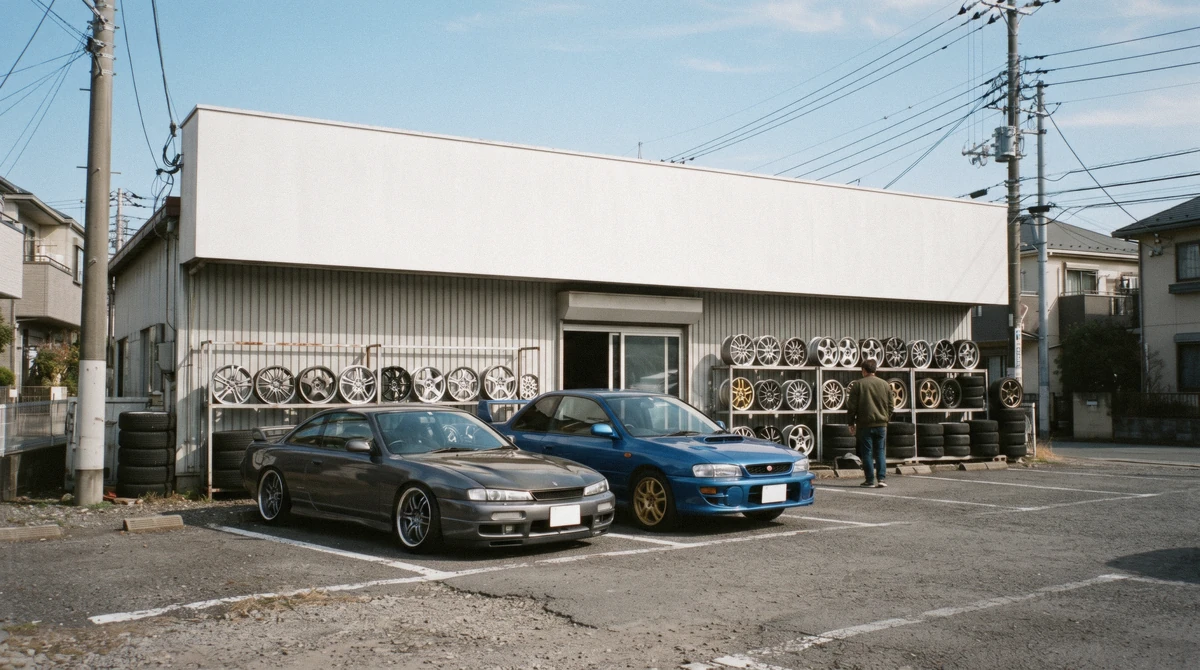
Up Garage is Japan's largest used car-and-bike parts chain, with more than 180 stores nationwide. Two real Tokyo branches are worth knowing: the Nerima branch, in Nerima Ward and reachable by local train and a short walk, and the Machida flagship store, further out on the western edge of Tokyo near the Kanagawa border, best reached by a bus or taxi hop from Machida Station. Neither is a quick stop from central Tokyo, so budget half a day if a parts hunt is the point of your visit rather than a bonus stop.
Nissan Crossing (Ginza)
A free showroom in Ginza with rotating displays that regularly include a GT-R alongside Nissan's heritage lineup. No booking, no fee, and it sits inside easy walking distance of the Ginza shopping district if the rest of your day is elsewhere.
Honda Welcome Plaza Aoyama
Another free showroom, near Aoyama-itchome Station, with racing cars and heritage models on rotating display. Pair it with Nissan Crossing for a single afternoon covering both manufacturers, no vehicle needed for either stop.
One showroom to skip entirely: Toyota Mega Web closed in December 2021 and still appears in outdated travel guides. It has not reopened; do not route a day around it.
Street Spotting After Dark Without a Car
Supercar and tuner street traffic in Tokyo concentrates around Roppongi and Shibuya late on Friday and Saturday nights, and this half of the hobby genuinely works without any vehicle: stand near a well-lit intersection, be patient, and modified cars pass on their way between meets. It is a different experience from a PA visit, no walking the rows, no talking to owners, just cars passing, but it costs nothing beyond a train fare.
Roppongi Crossing and the streets running toward Tokyo Tower see the heaviest tuner and supercar traffic after 10pm, especially on a clear weekend night. Shibuya's Dogenzaka and the roads circling the Scramble Crossing carry a similar but more mixed flow, more everyday traffic diluting the interesting cars, so patience matters more there than at Roppongi.
The same timing problem that blocks PA access limits this too. Last trains out of central Tokyo leave around midnight, while the parking-area meets, and much of the street traffic feeding them, peak between 22:00 and 01:00. A visitor without a car who wants to stay past midnight is choosing between an expensive late-night taxi home or cutting the night short. Anyone planning to stay out past the last train should budget for a taxi back to their hotel regardless of whether they saw a single interesting car, since relying on trains alone caps the night at around 11:30 to midnight depending on the line.
What DIY Really Costs
The daytime trail costs almost nothing. Showrooms are free, and a full day of train hops between Shinonome, Ginza, and Aoyama runs about ¥1,000-1,500 (roughly $7-10 at ¥150/USD, checked August 2026) on an IC card. Add the Up Garage branches and budget another ¥600-1,000 in fares depending on how far you range.
The night side is where DIY stops being cheap. A taxi from central Tokyo to Daikoku runs roughly ¥10,000-13,000 (about $67-87) each way before tolls, so a round trip lands at $133-173 for one visit to one parking area, with no fallback if it happens to be closed that night. That already exceeds the price of the cheapest JDM car tour in Tokyo.
- Daytime trail: about ¥1,000-1,500 ($7-10) in train fares, everything else free
- Night taxi attempt: $133-173 round trip for one PA, one night, no guarantee of access
For the tour-side price comparison in full, including what each guided option includes for the money, see is a JDM car tour in Tokyo worth it.
A Car-Free Daytime Plan That Actually Works
If you only have one afternoon and no interest in a taxi gamble at night, this is the realistic order to run the daytime trail, all of it on trains:
- Late morning: Nissan Crossing in Ginza, free, no booking, allow 30 to 45 minutes
- Early afternoon: Honda Welcome Plaza Aoyama, a short ride from Ginza, another free 30 to 45 minutes
- Mid-afternoon: A-PIT Autobacs Shinonome via the Rinkai Line, allow an hour to browse the shop floor and lot
- Early evening: stay at or return to A-PIT if it is a Friday, for the informal gathering scene in the lot
- If time allows: fold in Up Garage Nerima earlier in the day, since it sits in a different direction from the Ginza-Aoyama-Shinonome loop and is easier to visit before doubling back
This plan deliberately skips the Machida Up Garage branch and the night PA scene, since both add either significant travel time or a real access problem. Anyone who wants those two pieces should treat them as a separate day, or fold the expressway PAs into a booked tour instead of trying to reach them independently. Total time for the plan above runs about five to six hours including transit, comfortably a single afternoon and early evening rather than a full day given up to it.
When a Tour Is Genuinely Worth It
Three concrete things a tour gives you that the daytime trail cannot, no matter how much train fare you're willing to spend:
- Access to Daikoku or Tatsumi PA itself, the vehicle-only parking areas no pedestrian route reaches, covered on Daikoku Nights with its Tatsumi stop built in
- A guide who introduces you to car owners in the lot; showing up alone with no local contact usually means admiring builds from a distance rather than talking to the people who own them
- The ride in the car itself, the part a train ticket or a taxi fare simply cannot buy, offered on the Neon Nights route at the lowest price point in the lineup
None of that is a knock on the DIY half; the daytime trail above is genuinely good and genuinely free. It is specifically the PA meet, the part most visitors picture when they say 'JDM car tour,' that a tour reaches and a car-less visitor cannot. Weigh the two halves honestly rather than assuming one path fits your whole trip: most readers end up doing both, the free daytime trail on one afternoon and a booked night ride on another.
Etiquette Either Way
Whether you spot cars at A-PIT by daylight or ride into a PA meet with a guide, the same unwritten rules apply: ask before you touch or photograph a car up close, and never point a drone at a meet. I go through the full list of do's and don'ts in Tokyo car meet etiquette.
Frequently Asked Questions
Where can you go JDM car spotting in Tokyo without paying for anything?
Nissan Crossing in Ginza and Honda Welcome Plaza Aoyama are both free showrooms with rotating heritage and racing cars, and the A-PIT Autobacs Shinonome parking lot costs nothing to walk through, only the train fare to get there.
Is the Toyota Mega Web showroom still open?
No. Toyota Mega Web closed permanently in December 2021, though it still turns up in outdated guides. Do not plan a stop there.
Can you take a taxi into Tatsumi or Daikoku PA?
A taxi can drop you at the entrance area, but there is no pedestrian access into the lot itself at either location; they are built for vehicles moving at expressway speed. A guided tour is the practical way to actually walk the rows.
How do you get to Up Garage's Tokyo branches without a car?
The Nerima branch is reachable by local train and a short walk. The Machida flagship store sits further out near the Kanagawa border and is best reached with a bus or taxi hop from Machida Station.
Can beginners do JDM car spotting in Tokyo without local knowledge?
Yes for the daytime trail, since showrooms and parts stores need no local contacts. The night PA scene rewards knowing which nights draw the fuller lots, which is exactly what a guide provides.
What time should you arrive at A-PIT Autobacs Shinonome to see the Friday gathering?
Early evening, straight after the store's daytime hours wind down, gives the best chance of catching cars arriving. Treat it as an informal scene rather than a scheduled meet; no night is guaranteed to deliver a full lot.
Is street spotting in Roppongi or Shibuya worth doing on its own?
As a free add-on to an evening already in the area, yes. As the sole reason to travel somewhere, it is a gamble; you are watching for cars passing rather than parked and stationary, and a quiet night can mean very little to see.